
Our long and difficult relationship with nature needs to be understood in a first hand way.
Sunshine State Politics
January, 2024
Thus far my sailing sojourn to Florida and the Keys has been spectacular. I’m not merely talking about the weather, which of course comes as a welcome change from November in New England. The passage south was not exactly gentle summertime sailing, either. It rarely is. When I finally entered the Old Florida Channel (which leads by the south of Key Biscayne) on Jan. 3, 2024, it was the middle of the night and the wind had gone calm. I cursed, but then, conveniently, the flooding current carried me straight into the anchorage. Nice.
Now Key Biscayne has always been an upscale place, but at least they provide a dinghy landing for us down-scale boaties. There once was a public water tap too, but they removed it, which meant that I would have to sail over to Dinner Key Marina to fill up. At Dinner Key they have a tap conveniently located by the dinghy dock. Just arriving from Bermuda I needed fresh water, so I sailed over and anchored just outside the mooring field and proceeded ashore by dinghy.
Shock! This water tap has been removed. I ask around, but no one seems willing to volunteer any information. I finally find a hose on one of the docks and fill up my two 5-gallon jerry cans.
So all is well for now, and I enjoy my stay.
A few weeks later I set off for Marathon, Florida. Arriving in the Keys the first thing I notice is that the place is looking spiffier. The City Marina has been spruced up, and there’s a brand new gas station just across the street. Billboard signs are new, sidewalks clean, vegetation tended to. Fantastic. Nice to see Marathon shedding the trashy trailer park look.
I also notice fewer derelict vessels inside Boot Key. Sometimes such vessels are abandoned, and sometimes they have sketchy people living on them. Not to sound callous, but I am happy to see them gone.
Then I see a US Coast Guard RIB going around to all the anchored vessels, some of which are clearly not derelicts but cruising yachts. This gives me a start, but I never find out what the Coast Guard wanted with these vessels.
Upon arriving in Key West, the picture continues to come into focus. The live-aboard community around Key West is rather notorious, especially out by Wisteria Island. Approaching Key West I notice straight away that the ranks have been thinned, that there are fewer anchored vessels, and very few derelicts.
I proceed to anchor in my favorite spot inside Garrison Bight. While the showers and laundry machines are only accessible to mooring holders, the city marina still provides a water tap on their dinghy dock, accessible to all.
No more. The water tap can only be activated with a marina key card. And even if I chose to take a mooring, I didn’t see any available, which is often the case both in Key West and Marathon, particularly during peak season.
So now finding fresh water is becoming an issue. Also needing to purchase groceries, I make my way to the Winn Dixie. There’s a neat little spot in the mangroves where you can tie up just behind the Denny’s, in the shopping center where the Winn Dixie is.
Shock again.
The parking lot is now surrounded by a tall metal fence. There’s still a landing just by the overpass, and you can climb up onto the bridge and around the fence like a sewer rat. Which is of course what I did, having little shame about such things these days.
I did find a water tap but I’m not going to reveal where it is. Clearly the authorities are trying to drive out not only the boat bums, but the budget cruising crowd who prefer to anchor off and save their money. Which includes your humble author here.
Such is life. If you’re not paying rent, expect to be pushed away, at least from the major ports.
But then a news report pops up into my YouTube feed, a report on the situation with live-aboards in Miami. The city commissioner, David Suarez, wants all anchored boats gone. He attempts several lines of argumentation which are refreshingly refuted by the local authorities and scientists. I say refreshing because I’ve come to expect that television news will side with The Empire.
Anyway, first Suarez claims that the boats are illegally dumping black water (sewage) into the bay. But the local police only find a few vessels to be in violation. Then he claims that their anchors are destroying the sea grass on the seabed. But Prof. Jim Fourqurean of Florida International University explains that the sea grass was obliterated years ago when the Army Corps of Engineers dredged the whole place out to build artificial islands.
Well damn the facts, David Suarez remains undeterred and unconvinced. Toward the end of the report he says: “I think it’s time for you [the boaters] to move on, you know, stop destroying our bay.”[1][2]
“Our bay.”
Apparently Suarez and his constituency think they own the place.
And part of me agrees with Suarez in so far as keeping things tidy, even though I don’t own anything there, and I’m pretty sure he would look down his nose at me as well.
Speaking for myself, though I think I also speak for the vast majority of blue water sailors, it is the crowds and the noise and the detritus of the city that we are trying to get away from. We seek remote islands, wild coasts, and pristine bays. We want to see dolphins playing by the bow, great whales, pelagic birds in perpetual glide flight, the beauty of nature. We want the freedom to roam great expanses of ocean. We want to live in real nature, not a manicured nature park that has fences and officials charging admission. The fact that the open ocean remains untamed and unaffected by man’s technological advances is part of it’s increasingly unique and rare appeal to us modern day adventurers.
Beyond the yachting world, the lure of “life off the grid” appears quite pervasive judging by the immense popularity of back-to-nature themed channels on YouTube (just a random search yields channels such as https://www.youtube.com/@OffGridLife). Though much of it may be fantasy, the view counts reveal a real curiosity, if not a widespread, unmet psychological need.
Then there’s the present day environmental movement which, particularly on the issue of anthropogenic climate change, is a quasi-religion. Critics of climate change are declared “climate deniers”–heretics–though they may be impeccably credentialed scientists such as Richard Lindzen or Steven E. Koonin. [3] Sacrificing your standard of living is something like an act of repentance. Its mission is described in apocalyptic terms: the end of the world is nigh, or twelve years (as was once claimed by Rep. Alexandria Ocasio-Cortez). We have to act now to save the planet.
In any case, the yachties and the off-the-grid’ers and the environmental activists all share a conviction that human influence on nature is destroying something precious, and that the unrelenting expansion of industry may soon take it all unless something is done. Their passion is undeniable, but are they correct?
Science Values Facts
I shall now attempt a hypothesis which says that humans, particularly in the West, have been so blessed with technological powers which have freed them from the harsh natural conditions of their ancestors that they have both forgotten about said harshness, and yet are also aware that humans need some such natural conditions to in order to be human. It may be partly a conflation, but I think that people see the taming, manipulating, and spoiling of the natural world through technology as similarly acting upon the human soul. Just as a man can no longer roam free on the wide open prairie, so his mind cannot escape the incessant imposition of others who wish to corral his thoughts, encompass his mental horizons by their institutions. Human structures, billboard signs, city lights, a morass of regulations and licenses, and now social media are making it all but inescapable. True, humans are social animals who need other humans, but they also need to freely associate–or not–with those whom they choose. Totalitarian social orders make the latter impossible. The ineluctable march of technology appears to be facilitating a kind of totalitarian conformism which is only exacerbated by the lack of an authentic, deep rooting of our selves. This deep rooting appears to require a more primitive relationship with nature.
But not only is modern technology removing us from the natural conditions which formed the bodies, minds, and mores of our ancestors, much of modern philosophy prostrates itself before modern science, accepting its purely naturalistic model of reality as true by virtue of its rigor (and success). So a modern philosopher such as Yuval Noah Harari says that values, countries, governments, God, are “fictional realities”.[4] They may be useful, only they are not real.
Well indeed, we don’t see any national borders on the satellite images. We cannot find any human virtues in the night sky or under a microscope. So the question needs to be addressed: might it be the case that values can only be regarded as fictions?
To the contrary it’s not difficult to convince oneself that while scientific truths are objective–free of personal preference or politics–the pursuit of truth cannot be. Scientists don’t just go wandering about the world measuring things. What to measure, and with what? By what units? Counting grains of sand in a desert is pointless. But understanding, for example, how certain types of plants can still thrive in a desert might be important for increasing crop yields.
Science must therefore be directed by human valuing. Objects of science are discovered, or brought out of unconcealment, by subjective forces, by a passion, a calling, a psychological need. “The evidence is overwhelming that we see the world through a structure of value”, says Dr. Jordan Peterson, “raw empiricism doesn’t work. This is partly why the Enlightenment has to come to an end. You cannot orient yourself with knowledge of the facts, and the reason for that is that there is an infinite number of facts. You have to organize the facts, and as soon as you organize them, you’re in a value hierarchy.” [5] Peterson suggests that the most basic contextual structure by which we understand a value hierarchy is the story, particularly through archetypal stories such as those in the Bible. Stories are character sketches. I shall now provisionally draw a correlation between the profundity and durability of truth claims and the character of truth seekers. To state it succinctly: profound truths must come from profound people (the corollary being the famous latin: ex nihilo, nihil fit).
As far as the circumstantial evidence goes, I haven’t heard of many groundbreaking scientific discoveries originating in faculty lounges. I am not aware of any great writers who perfectly aligned themselves with prevailing ideas of genius in their own times, or who lived on a guaranteed income. Darwin had to endure a long voyage to the Pacific on the HMS Beagle. Einstein was a lonely misfit who did most of his groundbreaking work during his free time while employed as a clerk in a patent office. What worth knowing has ever come from the ensconced?
Conventions provide paths of least resistance, of energy conservation, and as such are immensely useful. But life is not static, nor is art nor science. Both man and his creations require constant nourishment. Slogans such as “hell no, we won’t go”, which rallied a nationwide counter-cultural movement in 1960’s, is now passe, its vital force spent. The Spirit of the Age dies away until the next emerges. No one has the last word, not even in science, not even Sir Isaac Newton. P. B. Shelley wrote of the transitory nature of everything human in his famous poem “Ozymandias”:
    And on the pedestal, these words appear
    My name is Ozymandias, King of Kings;
    Look on my works ye mighty and despair!
    Nothing beside remains. Round the decay
    Of that colossal wreck, boundless and bare
    The lone and level sands stretch far away
The most enduring literary works, such as the Bible, concern themselves with guiding human creation, beginning with the creation of new humans. These stories chiefly deal with human character types and dispositions, how they typically play out when instantiated in the real world. Great stories, those which we consider to be archetypal stories, can be abstracted into general valuation schemas or templates so as to be, to put it crudely, reusable. We might therefore say that guiding principles abstracted from archetypal stories are a necessary condition for producing and maintaining a civilization, its science, art and politics.
But nowadays we live in a world that is being radically transformed by modern science and technology, and this science and technology describes a world that is value free and thus is incapable of evaluating its own underlying value hierarchy, its guiding principles. It has to defer to the free market for its reasons to pursue this and not that. Which has produced no shortage of technological wonders, that must be acknowledged, except that lacking any credible, coherent philosophical architecture it does nothing to maintain it and in fact appears to corrode the very culture which produced the scientists and tech wizards in the first place. And so we are back to needing good stories to cultivate humans capable of producing and maintaining our peaceful and prosperous civilization. We still need guiding principles for human development. I argue that in order for this to come about, humans will need a re-balancing of their relationship with nature.
At this point, however, I pause to take a slight detour into the philosophy of Martin Heidegger, particularly with respect to his views on modern technology. His arguments (as usual) are rather complicated, but they are profound and helpful to our present inquiry.
Summary Notes
- The constant transformation of the natural world into human structures appears to be causing psychological distress for many who fear that soon no one will be able to escape the artifacts and impositions of others.
- Modern philosophy generally accepts the naturalistic worldview of modern science and technology. This naturalistic view is mechanistic and value free and thus provides us with no coherent philosophical architecture with which to evaluate good and bad (including the value of science and technology).
- However, as all of science is a human creation, there must be an underlying set of values driving science forward.
- Character formation is the focus of all wisdom texts such as the Bible. Modern philosophy appears inadequate for this task. It is questionable whether the vibrant, innovative, and free society which has been Western Civ is capable of maintaining itself.
The Question of Technology
According to Heidegger, unlike pre-modern technology, modern technology does not merely furnish us with tools, it is also a way of revealing truth. Heidegger writes (and I shall try to unpack this for you in a minute, so hang on):
“… when destining reigns in the mode of Enframing, it is the
supreme danger. This danger attests itself to us in two ways. As
soon as what is unconcealed no longer concerns man even as
object, but does so, rather, exclusively as standing-reserve, and
man in the midst of objectlessness is nothing but the orderer of
the standing-reserve, then he comes to the very brink of a
precipitous fall; that is, he comes to the point where he himself
will have to be taken as standing-reserve. Meanwhile man, precisely as the one so threatened, exalts himself to the posture of
lord of the earth.” [6]
Let’s start by understanding what Heidegger means by “standing reserve”.
Modern machine technology is unique in its rendering of nature as stored energy for human purposes. For example, in the past when men traveled oceans by sail, they used only God’s wind, of which they had no control. With the advent of powered vessels, with all of the interlocking systems of petroleum extraction and delivery, of fuel lines and combustion cylinders, etc., man’s relation to nature is as to one of mere raw materials, or “standing reserve”, to be called up whenever seagoing transport is required. No need to wait upon wind or tide when you are diesel powered. Though the sailing ship is also a technological thing, it is distinctly different from the powered vessel in it’s direct relation to nature–to the wind and the tide–which it cannot order up as needed.
The way modern technology traps and stores nature lies in its method of setting up nature to report itself according to mathematical models. As an example, recall perhaps a physics experiment you did with a pendulum made of a metal ball suspended by a string. When you held the ball at an angle from the vertical and released it (the initial conditions of the system), you could calculate from Newton’s laws the exact amplitude and frequency of the pendulum swings. Of course the pendulum will not behave precisely as the model predicts. For example, if you neglected to add the effect of air friction on the swinging ball (as well as the string), the mathematical model would have the pendulum swinging forever while in reality it slowly comes to a halt. The mathematical model is not the physical reality. However, things in the universe can be set up to report themselves in a way that is sufficiently close to abstract mathematics–that is, as isomorphic to the machinery of a formal logical system of symbols and rules–as to allow for the construction of actual machines, material instantiations of our abstractions.
Now we might have been tempted to say here that the mathematical model forecasting the future of the apparatus is the underlying reality of which our actual pendulum approximated. In this way the mathematics is seen as a Platonic Form, an eternal, unchanging essence of the natural world. But mathematics is an abstract language, a collection of symbols with rules for their manipulation, whose essence is exclusively, it would appear, that of the human soul. Nobody has ever tripped over a “27” while hiking in the woods as they would a rock or tree branch. Put this way we immediately recognize the logical category mistake. Math and logic are realities of the mind. To think that the universe, including all that we perceive, is ultimately reducible to formal symbolic systems of logic, to mathematics, will necessarily lead to such category mistakes. I hold that this is the way in which modern science and philosophy bounds our horizons for what can be regarded as real. If mathematical physics underpins all observable reality, then free will must be an illusion, our value system but a human fiction (think Harari) since everything is predetermined according to mathematics. Yet we nonetheless observe that somehow these human fictions appear to the turn control knobs to the giant machine which is nature (how exactly that could happen was Descartes’ mind-body problem) to call up what is wanted, e.g.,travel, indoor heating, electric lights, etc. We are left confused. So far as I can tell this view (i.e. scientific materialism) is simply untenable, but nonetheless has wide acceptance because of its support role in the miracle of modern technology.
Anyway, let us agree that the march of modern machine technology is the ever extending of the setting up nature within mathematical models. This is what Heidegger calls Enframing, which he describes as, and I’m paraphrasing here: a challenging forth by which man sets up nature to report itself in a mathematical way, a way that makes it calculable in advance. Heidegger regards Enframing as a supreme danger not because of the technology it produces, there is nothing inherently evil (or good) in technology, but because it monopolizes all ways of revealing, of man and his relation to nature. Man sets upon nature in order to control and master it, and eventually he will similarly set upon himself. Recall at the outset I hypothesized that while the present day environmental movement abjures the manipulating and spoiling of nature by machines and industry, many similarly fear a manipulating and spoiling of humans, of their innermost sanctum. Consider the case of social media whose profitability depends on transforming large numbers of humans into a resource that can be relied upon to behave a certain way based on the content that is fed to them–to buy things, to vote a certain way, etc. That is, the financial success of social media requires transforming humans into standing reserve.
So in light of all of this I humbly propose the following. Firstly that we consider mathematics a dialect of the Logos, or The Word if you prefer, which affords us humans partial perspectives on Being (by which I mean the indefinite manifold of experience, what’s coming from your senses, your mind, your emotions, etc.). The fact that nature can be set up to report itself according to mathematics does not prove that we are essentially machines, but rather that because we can understand Logos (or The Word), we have the essential freedom to roam about in a world of ideas. The fact that we can construct great edifices of mere ideas, like mathematics, and then use them to manipulate the natural world in a way that bends it to our will, is the extent to which we have been gifted, though in a limited way, the powers of our Creator. Possessing The Word is possessing a degree of freedom from instinct, disposition, genetic programming, etc. so that we can construct great edifices of nothing but ethereal ideas, and yet use these ideas to understand and transform ourselves and our world.
Let me just note that what I propose does not preclude the existence of universal truths. What Newton’s laws say about pendulums, for example, are absolute truths within the bounds of their original scope of applications. “If you set the experiment up this way, you will observe the following”– such are the universal truths of science. The mistake comes when we see the mathematical model as the underlying reality, as a Platonic Form, as Being itself, rather than as a tool by which we can organize and understand predictable patterns within Being. The scientific materialist has only a hammer –modern science– and wants to reduce the entire universe to a set of nails. This is when we end up with nonsensical questions like: where in space-time does Einstein’s theory of gravity exist? What is the mass or energy equivalent of “3”?
Summary Notes
- Martin Heidegger holds that modern technology is converting nature to “standing reserve”, essentially raw materials ready for use.
- Not only is modern technology a means to an end (e.g. reliable transportation), but is also way of revealing truth, i.e., nature as standing reserve.
- Modern science and technology reveals nature in terms of mathematical models which render it calculable in advance. The mistake of scientific materialism is regarding the mathematical model as a Platonic Form, the underlying reality of Being, of everything we sense, intuit, feel, etc. This leads us to believe that nature is a machine devoid of purpose, and from which we can derive no human values.
- Contrarily I propose that we view mathematics as a dialect of the Logos, or The Word, with which we humans have the essential freedom to roam about the world of ideas in order to create such things as mathematical models, literature, art, etc. Through such creations we can transcend instinct, genetic programming, and environmental determinism. In this way we have been gifted, though in a limited way, the power of our Creator.
The Love of Wisdom
To my thinking the most serious fault with modern philosophy, specifically with scientific materialism, and with atheism, apart from its sycophantic aping of modern science, is the smuggled in premise that we can understand things independently of a perspective. If we believe that we can actually know Being itself, then we believe that there is an endpoint to science, that there can be a Theory of Everything. I hold that, philosophically, this can never be, and history, at least so far, confirms it. Every new discovery in science or work of art only opens up a new vista, and in so doing reveals itself as partial. Newtonian mechanics was eventually found wanting when it came to microscopic phenomenon. What Newtonian physics brought into our collective knowledge allowed for new lines of exploration, new truths of the universe to be uncovered. Recall earlier we said that guiding principles for human development are most fundamental as they underlie all art, science and technology of any given civilization. Guiding principles are what channel the chaotic currents of a group of human souls, beginning with the education of its youth, into a shared public knowledge space broadly referred to as culture.
This is a somewhat tricky but important point to understand. While a culture will (one hopes) have a collection of bedrock, universal truths in its knowledge space–which could potentially be recognized by and serve any such knowledge space–as we’ve said there is an indefinite number of facts and possible truth claims. It is the underlying value structure contained in a culture’s guiding principles (as I have called it) which determine which facts and truth claims will be bought into the public square, how they will be arranged and organized. So for example a seafaring and trading peoples such as the ancient Phoenicians would have a rich knowledge base centered on ship design and navigation when compared to the Mongols, who had no need of such things. Such is the inescapable role perspective plays in all knowledge production.
Now, we might say that all of knowledge is relating concepts, and in this way knowledge is the unifying of mental pieces into new, synthesized pieces. All knowledge that can be cast in a spoken or written language is a unity, the unity of subject with predicate. “All men are mortal”, “not all whales have teeth”, etc. It seems evident enough that much of the value structure underlying knowledge is simply utilitarian (the desire for food, shelter, comforts, etc.). Nonetheless we have to wonder if there is something beyond all of that which we are aiming at, evidenced by the universal human proclivity to believe in gods or God? Perhaps some ultimate unity of all concepts?
Well we’ve already conceded, in refuting scientific materialism, that a Theory of Everything is not possible because concepts are always partial and can produce only more partial understandings. We humans are only afforded a perspective, not omniscience. In light of the foregoing a better question would be: is there a universal value structure which should guide our knowledge production so that we may get closer to finding an ultimate unity? The Eastern philosophers spoke of The Way. Perhaps this is how we should think of it. A way is a path forward in the world of becoming. The Way, if there is such a thing, would be the specific path for every human which brings him to full fruition.
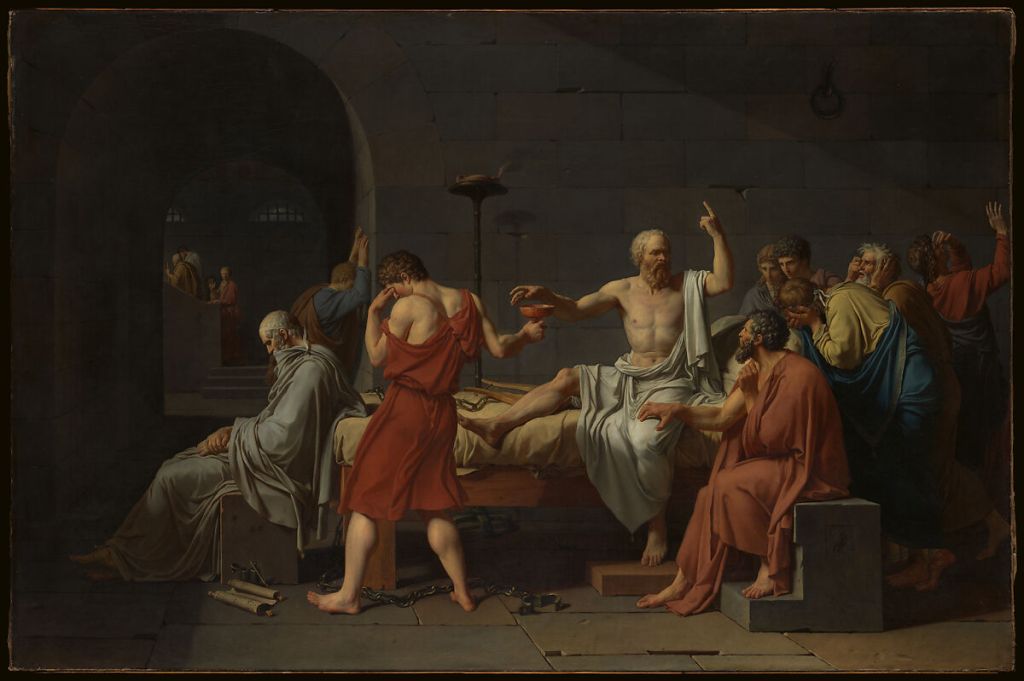
In a famous Socratic dialogue, The Symposium, Socrates presents us with a non-sexual Eros: “Love [Eros] is the son of Plenty and Poverty … far from being tender and beautiful as most people think he is hard and rough and unshod and homeless … always dwelling with want. But from his father again he has designs upon beautiful and good things, being brave and go-ahead and high-strung, a mighty hunter, always weaving devices, and a successful coveter of wisdom.” [7] Love involves privation, a part seeking to make itself whole. The philosopher–literally the lover of wisdom–lives between ignorance and wisdom, aware of his ignorance, which is ugly, but with his sights set on wisdom, which is beautiful. This is the philosopher’s perspective. The dialogue continues: “The right way to approach things of love, or to be led there by another, is this: beginning from beautiful things, to mount for that beauty’s sake ever upward, as by a flight of steps, from one to two, and from two to all beautiful bodies, and from beautiful bodies to beautiful pursuits and practices, and practices to beautiful learnings, so that from learnings he may come at last to that perfect learning which is the learning solely of beauty itself may know at last that which is the perfection of beauty.” [7]
I interpret beauty as a approximating an ultimate unity (the more lasting and beautiful, the closer the approximation), a sense of completion–perfection which says “don’t change a thing”. This is as close as us mortals, driven by our partiality, our lacking, can come to finally finding a blissful resting place, finding heaven. Even non-linguistic works such as painting and music strive toward a unity, otherwise they don’t make sense, they don’t move us. No great work of music is just a concatenation of harmonic sequences that just suddenly starts somewhere and ends somewhere else. Think of a great symphony like Beethoven’s Ninth, starting off with the low, agitated strings, portending something momentous when suddenly it’s all bombast with the horns. Then there’s usually a slower, more introspective movement, and a final climax at the end. It “tells a story”, has a structural unity.
As with works of art, so it is with science. Think of Newton subsuming a falling apple (allegedly) and the orbit of the moon under three simple, magisterial laws of motion. To take things we can all observe in the universe and describe them, unify them, in a handful of mathematical expressions is a creation of beauty.
For Socrates, Eros is the driving force toward these ultimate unities, toward beauty. The way in which individuals grow themselves toward creating things of beauty, which give us glimpses of the divine, will rest on a value structure. Geniuses may in fact create a new kind of human story which can modify the accepted value structure of a culture, but nevertheless everyone’s value structure begins with what is given. Obviously, though it is politically incorrect to say so, advanced (read: superior) cultures are the ones whose value structures produce humans who create beautiful things. Though beauty is impossible to measure, two relevant metrics would be the durability of the creation and the breadth of its influence.
Summary Notes
- Nothing can be known independently of a perspective. We can never know Being itself.
- All knowledge that can be written or spoken seeks to unify subject with predicate. Is there an ultimate unity to which all knowledge aims?
- Socrates claims that Eros is what points us toward ultimate unity by begetting in beautiful things.
The End of History
Well be that as it may, modern technology combined with decentralized free markets has created so much abundance for so many that a great number of humans no longer feel any need for beauty and all the work it entails. The West appears to be succumbing to a spiritual entropy resulting from over reliance on sense stimulation to maintain well being.
The post-modern philosophers addressed this uniquely modern problem. “The rapidly accelerating technology was also producing a mass consumerist culture dominance … Technology also began to advance rapidly, which, together with the mass production of consumer goods, enabled this ‘middle culture’ to fuel a new postrationing desire for art, music, and entertainment. This, in turn, sparked fears that society was degenerating into an artificial, hedonistic, capitalist, consumerist world of fantasy and play…” to the point where “all realities had become mere simulations (imitations of real-world phenomena and systems) and simulacra (‘copies’ of things without an original).” [8]
The endlessly taxing labors of mere survival, once the norm for most any common man, gives way to recreation, to fantasy and play, to “lifestyles”. Recall Heidegger’s concept of ‘standing reserve’, which is nature as raw materials on hand for use. The ever increasing the abundance of standing reserve means that human lives will center less on bare necessities and more on luxuries and vanities. As modern humans no longer face the common enemy of mean old Mother Nature, a sense of common cause is lost.
So it is perhaps a matter of course that the post-moderns became obsessed with social power struggles to the point of claiming that language itself–even mathematics–could be used to subtly maintain a socioeconomic caste system. As technology lowers the threshold for the requisite skill and fortitude to succeed in productive industry, the natural hierarchy of competence becomes harder to discern. Present day social media makes it easier than ever to profit by counterfeit. Corporate policies such as ESG (Environmental, Social, Governance) would have been laughable in the much leaner, not-so-distant past. Necessity rules an ever smaller portion of the economy, buried under layers of a luxury economy that caters to vanity. Participants in the latter must excel at marketing. This economy caters to man living almost exclusively within artificiality. The victors in this economy can indeed appear to be nothing more than skilled manipulators in human power games.
Which perhaps would not be a problem if it weren’t for the evident fact that humans need a higher authority, a supreme judge, someone or something that squares all accounts. Friedrich Nietzsche famously anticipated the modern problem in declaring “God is dead”, not on a note of triumph but as a warning of impending social catastrophe. Nietszche thought that the philosophers could effectively reconstruct God through a re-valuation of all values, but as we’ve said in the foregoing, not only are men mortal, but so are their creations. They cannot replace God. To think otherwise is to be as delusional as Ozymandias. The Enlightenment vision of a society founded on science, on pure rationality, is a chimaera.
Recently there has been renewed interest in ancient texts, particularly the Bible. Dr. Jordan Peterson has now published two series of lectures on the Bible on YouTube which have garnered tens of millions of views. It seems that many people are coming to question modern philosophy’s dismissal of traditional religion. Perhaps those old books are smarter than the smartest of the moderns. Peterson seems to think so.
I have outlined above what I think is the problem with modern philosophy, with scientific materialism, with atheism. Just to recap, I argue that we are not purposeless machines locked in chains of cause and effect, though aspects of our bodies can be abstractly represented as such. But rather we have been gifted The Word by our Creator, which enables us to wander in a world of abstraction, to imagine and then create in the material world, as did our Creator. In this way humans are made in the image of God. We kill God by not following The Way, or His Way, a human developmental path guided by proven wisdom.
However, even if I am correct about the philosophic problem, that modern philosophy is simply mistaken about God and religion, it’s still all too cerebral. We need to “touch some grass” as the saying goes. This is where our long and difficult relationship with nature needs to be understood in a first hand way. That is, we must have some relationship to the natural world similar to the environment in which our ancestors evolved.
How? I can only offer my own experience as a suggestion.
I was the son of a schoolteacher who took our family sailing during his summer vacations. I knew very early on that I was going to become a sailor of some kind. I also developed a neurotic conviction that turning on the engine when conditions no longer favored sailing was cheating. A sailboat with an engine is not a sailboat. Those who go knocking about in auxiliary-sailing vessels are not sailors.
I’ve since eased up on the purist evangelism because I tried out exactly what I was preaching and learned. When I first began sailing Ruth Avery she didn’t even have a battery for any electronics. When the wind failed my only option was a 14-foot sculling oar, which is really only of use in calm or near calm conditions. But that didn’t stop me from circling the globe, half of which I did by sextant only navigation. I do recall thinking to myself, beyond the purist appeal, that I wanted to sail this way “because of what I would become” as a result. I wanted to see the world through the eyes of sailor, not a tourist. One of my sailing heroes, Sterling Hayden (who was also a movie actor), put it this way: “Why go to sea under sail at all if you’re so concerned with security? Why not go as a kind of frozen vegetable buying your way across the world surrounded by hot running water, epicurean cuisine, swimming pools and tiny-tot programs, teen-age programs, mommy and daddy programs–designed for your delectation, and designed too to quarantine you from the contagion of elemental wonder and awe known only to simple living?”[9]
I still sail Ruth Avery and live aboard full time. I have added a small outboard motor for maneuvering in close quarters, but she remains without inboard power, her underwater profile bears no disfiguring aperture or propeller. I use electronic navigation (chart plotter) and offshore I use Iridium satellite weather forecasting. My three year circumnavigation odyssey, sailing much like the great Joshua Slocum did back in the late 19th century, had served its purpose. Though I’m not sure that I’ve yet unpacked all of the lessons from that episode of my life, I have learned that living in the past, “living with nature”, is hard. When I was younger and thirsting for high seas adventure it was just what I needed, but now it’s too hard to be fun. So I’ve gradually allowed modern technology in to make my life a bit easier and rather more enjoyable.
So the sea cured me of the back-to-nature hankering when I actually encountered it’s primal moods as transmitted by wind on sails, by waves and currents on a small craft that has ventured far from help. Offshore I had no communication with the outside world except for whatever I could pick up on my shortwave radio. I navigated by the sun, moon, and stars. Back then I had almost a Luddite disdain for modern technology. I wanted nothing to disrupt my communion with the universe.
Nowadays I love my smartphone and computer, fast and reliable mail order services like Amazon, super-markets full of fresh food (which I can store since I added refrigeration some years ago … ). I love the conveniences of modern life. I love videos on demand thanks to YouTube. I don’t feel like I am living an artificial and empty life. I feel grateful that I don’t have to suffer like my ancestors.
But I would never have reached this point had I not gone to sea under sail–actually under sail, mind you. Which brings me back to my original claim that mankind needs wildernesses and wild oceans to roam, needs the myriad of creatures with whom he shares much of the animal part of his soul. Otherwise he will likely lack first hand knowledge of the natural sentiments and impulses of his own soul, he will only know what he is supposed to think and feel according to culture. Wisdom requires awareness of one’s natural self.
At least that’s my experience. Conservatives often facilely dismiss the environmental movement as a glorified please don’t litter campaign. I contend that without the wild–what has not been distorted by human industry, human ideas–we cannot find the basic psychological grounding we need for our journey through life. Wisdom texts alone are not enough.
Environmental Opportunists
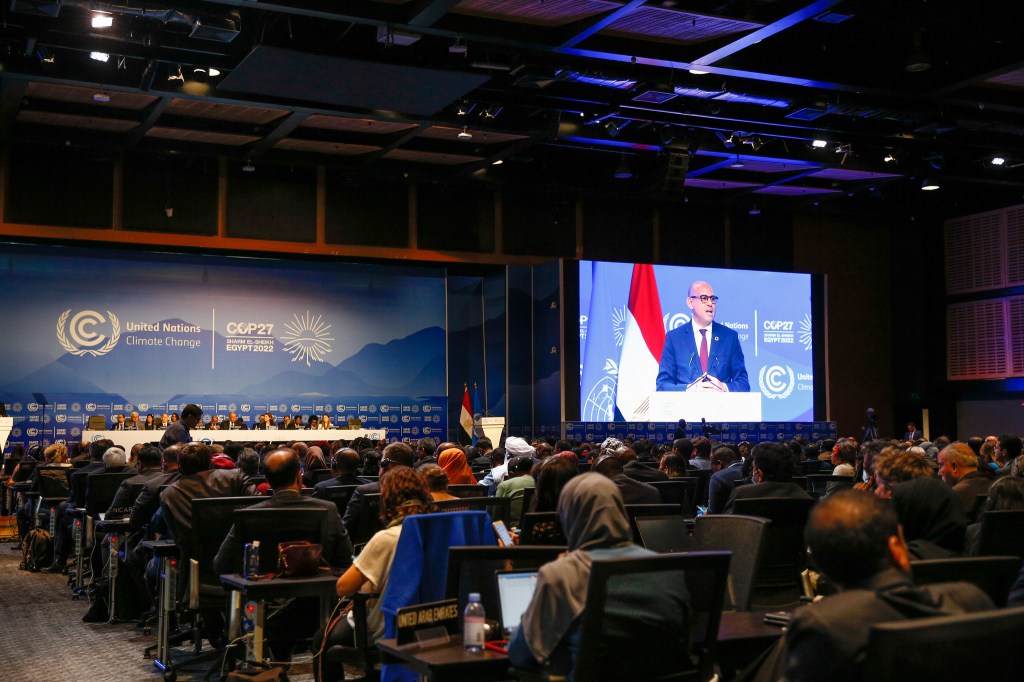
I began this essay talking about Florida politics and the conflict between the city commissioner, David Suarez, and the live-aboard boaties in Miami. Suarez, in my estimate, is an environmental opportunist. The passion of the present day environmental movement is palpable, and wherever there are strong passions, particularly if they are seen as virtuous, there will be opportunists. I’ve met a few Suarez types in my travels. I’ve seen a few harbor masters obviously ingratiating themselves to the local rich while trying to pass themselves off as noble stewards of the planet. Another reason why I avoid the big ports.
And just as the great religions of the world have sometimes naively enabled sociopaths (e.g. pedophile priests), so to does this new green religion. As a boatie who not long ago sailed the coast of Spain, I have been following this strange situation with the orca whales, which appear to be attacking the rudders of sailing yachts. In some cases they have sunk the yachts. But as this video explains, harming any orca whale is against the law, even if it is attacking you, if it is damaging your property or causing injury. [10]
This is crazy. Every human has a right to defend himself and his property when attacked, whether it be by another human or an animal. But the environmental loonies don’t care. If you harm their whales, you are a criminal.
Most concerning of all, in my estimate, is what appears to be an emergent Global Green Elite. Organizations like the World Economic Forum come to mind. They seem to be pining for a new Garden of Eden, a new green Earth only sparsely populated by humans. Billionaires preferred. Their slogan “you will own nothing and be happy” is an obvious lie. People want their stuff, they want their own place and the Global Green Elite wants to take it all away to save the planet. There are of course many theories, but certainly one plausible theory is that they are working toward a new feudalist system. They actually want to reduce the masses to poverty (to owning nothing) in order to turn them into dependents, dependent on their lords for survival. At which point the new feudal lords will have the yoke snugly fitted around the necks of the commoners.
A few years back I wrote a short story about a cabal of global leaders rolling out a mass vaccination program to treat a pandemic that was not nearly as deadly as the news media kept claiming. The vaccine didn’t really cure the disease either, except it did have one side effect of sterilizing a certain percentage of the population. A small enough percentage as to allow for plausible deniability. The elites dreamed of the day when they could visit purified nature–forests with all sorts of animals, oceans with whales and dolphins, mountains and big skies–while not having to put up with overfed dumb-asses driving around in pickup trucks. They would only see purple mountains and majesty, not a landscape littered with fast food restaurants and strip malls. They envision a beautiful earth all to themselves once that the lower order humans are removed.
I fear that this may in fact be their vision. Let us remain ever wary of false prophets as we go forward in trying to sort out our evolving relationship with the natural world and all of its creatures.
References
[1] https://www.youtube.com/watch?v=8sjt1vC6EUk
[2] https://www.youtube.com/watch?v=pwGiYfNnxj4
[3] Koonin, Steven E.. Unsettled: What Climate Science Tells Us, What It Doesn’t, and Why It Matters. BenBella Books. Kindle Edition.
[4] https://www.youtube.com/watch?v=nzj7Wg4DAbs&t=886s
[5] https://www.youtube.com/watch?v=z7koRuL02sY, at 1:18:00
[6] Martin Heidegger, The Question Concerning Technology and Other Essays (Garland Publishing Inc., New York, 1977), pp. 26-27
[7] W. H. D. Rouse (translator), The Great Dialogues of Plato (Mentor, New York, 1984), pp. 99-105
[8] Pluckrose, Helen; Lindsay, James A.. Cynical Theories: How Activist Scholarship Made Everything about Race, Gender, and Identity—and Why This Harms Everybody. Pitchstone Publishing. Kindle Edition, p. 26
[9] Sterling Hayden, Wanderer (W.W. Norton & Company, Inc.,New York, 1977), p. 14
 Kevin Boothby Sailing
I am not sure how I found the philosopher somewhere other than his sandbar? I thoroughly enjoy him though. His musings resonate with me! Keep on Kevin! Fair winds and following seas!
LikeLike
Thanks for stopping by, Charlie. University cloisters are for hacks. The real philosophers are found on sandbars ha ha ..
LikeLike
I think there was something in the water in that corner of CT; in reading your previous post I am realizing that, for many of us, it has taken a long time to unpack and reverse some of the koolaid we were fed.
>
LikeLiked by 1 person
Kevin,
Great to find that you are still active, both on the water and mentally. As one with a passing familiarity with Heideger, I’ll need to review your comments in more detail.
We had a passing encounter in Bermuda which left me with lasting memories. I hope we can catch up.
Bill
s/v Songbird
LikeLiked by 1 person